Work / MUBI
MUBI
MUBI is a global streaming service, film distributor and production company for people who love cinema: hand-picked films from iconic directors to new voices. As a lifelong cinephile, I have been a subscriber since 2011. In 2018 founder and CEO Efe Cakarel asked me to help MUBI grow beyond its cinephile core. Over six years I helped the team understand its wider audience, say what MUBI stands for, and find words that welcome more people into great cinema while the team keeps raising the bar.
Context
MUBI has grown from a niche website into a global streamer, with its own releases in cinemas and MUBI GO: a free cinema ticket every week. The people at MUBI are passionate curators of great cinema, but not enough people even among cinephiles knew it existed. My brief was to help close that gap: understand the market, articulate MUBI's purpose and point of view, and help the team bring it to a wider audience.
Question
How can MUBI make great cinema more accessible to more people?
What we did
Stage 1
Insight, story and identity
Working directly with Efe and his team, I briefed insights agency Basis for audience research to size the market, understand who MUBI's subscribers were and what they wanted from it. It showed a much wider audience potential: film lovers who may already have Netflix, but who would choose MUBI in a heartbeat if they could find it and understand its offer.
By 2022 the streaming market was increasingly crowded. Following an earlier attempt to differentiate by sounding niche, MUBI started using words like beautiful, interesting and incredible in their promotions: pleasant, but generic, and not always on point. New research in seven markets confirmed it. I worked with the marketing team to help them find the right tone: a voice clear about what MUBI offers, and open to everyone who might love it.
I helped clarify and articulate MUBI's why: its value proposition, its point of view and what it believes, so that the team, its partners and its filmmakers could build a powerful, coherent story. We put it to work straight away, on the launch of MUBI GO, then on presenting MUBI to a wider audience.
The visual language required an update, so I introduced Efe to my friends at Spin. They proposed a beautiful evolution of the identity, with a flexible information system, and a generous use of colour to express the mood of each film. At the same time, Efe hired a new creative director, Pablo Martín, who has created a phenomenal in-house studio. They are responsible for all design and creative marketing, including the beautiful Notebook magazine.
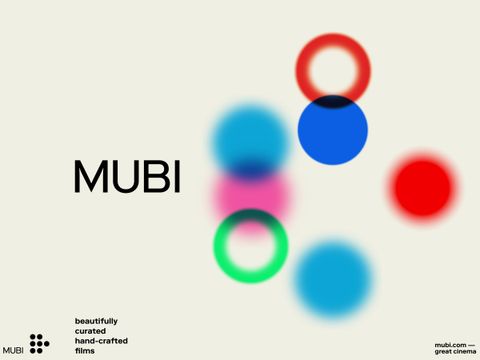
Identity development by Spin
What we did
Stage 2
Messaging refresh
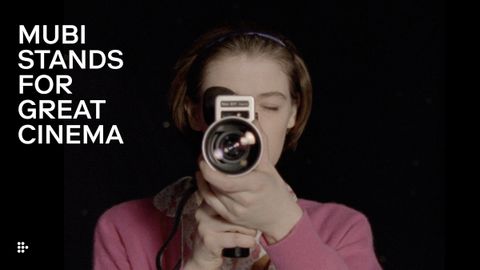
The research put a finger on the real barrier: MUBI's content and communication looked niche, difficult, as if it needed prior knowledge. The answer was to be more clear about what MUBI is, inviting people in. MUBI stands for great cinema, the seventh art, which is necessary, universal and inclusive.
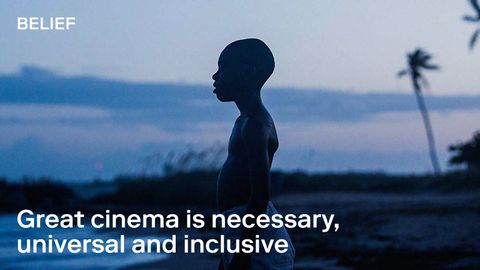
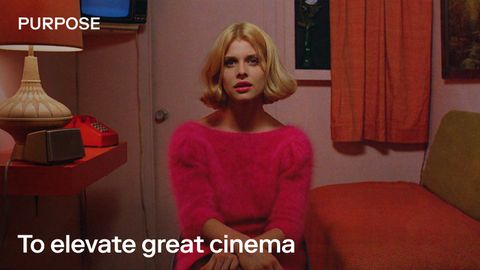
We created four principles to inspire every piece of communication: speak from the heart; enrich the experience with context; don't assume prior knowledge; tell stories about film. We tested the principles against MUBI's own campaigns in a workshop with the marketing and creative teams: what worked, what didn't, and what to try next. A new boilerplate and a short manifesto completed the toolkit. I continued to support the marketing and creative teams through 2024, as they developed MUBI's voice in multiple campaigns across markets and media.
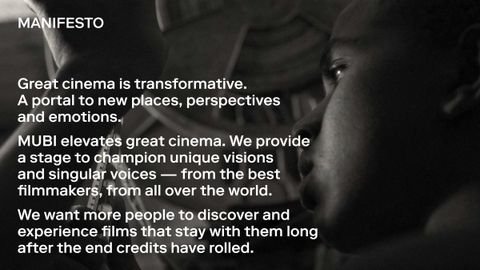
MUBI Manifesto
What changed
MUBI had a spectacular run while staying true to its purpose to elevate great cinema. The identity Spin built has stretched to MUBI GO, the MUBI Podcast and The Match Factory, and MUBI has since become one of the most talked-about names in independent film.
More work